By Miles March · Published · 10 min read
In this article
Early at Old Trafford, the ball spilled into the space in front of United’s penalty area. Villa had a player there and another on the right. John McGinn found Alysson, who put Villa ahead inside the opening two minutes. In stoppage time at the other end, Patrick Dorgu got down the left and delivered low for Joshua Zirkzee. A corner brought United’s fourth. By the end, both teams had discovered something important about the space the other was willing to leave.
United went into the international break 18th with eight points from ten games. Michael Carrick was dismissed on 12 November. The club confirmed Mauricio Pochettino’s appointment the next day, with a start date of 18 November and Liverpool away on 22 November. Antonio Conte is our third, hypothetical setup. We reviewed selected sequences from Sky’s three-minute highlights and used Coaches’ Voice for the wider match analysis.
Over the rest of the season, the Pochettino scenario cuts United’s simulated relegation frequency by ten percentage points, from 25% to 15%, if the assumptions about chance creation and prevention hold. Conte’s plan gets to 14% by leaning harder on chance prevention. At Anfield, watch what Bruno Fernandes does when the striker goes to press. If he closes the return pass into midfield and United’s two midfielders can stay connected behind him, there is something to build on.
References:[1] Sky Sports[2] Manchester United[4] Coaches’ Voice[8] Swisher Post[7] FourFourTwo[5] Associated Press[6] Manchester United[16] Premier League
Carrick had already turned up the press
Villa’s first goal shows what an opponent can do when it has a player available for the next touch. The highlight begins too late to judge United’s entire press. In its wider analysis, Coaches’ Voice describes Villa attracting United forward and playing directly into Nicolas Jackson, with support on either side for the first or second ball. It also describes United getting more joy once Bruno Fernandes and Bryan Mbeumo could lead the pressure and the midfield stepped with them.
The distinction matters. Opta’s October analysis had already found a higher share of high-block defending under Carrick than in his spring spell. There was an idea there. Its vulnerability was the space between the player setting off and the one meant to cover him. Villa’s compact late block posed the reverse problem. Dorgu stayed wide enough to get around it, and Zirkzee turned a low delivery into a chance from close range. The equaliser came from a corner, a separate mechanism.
References:[1] Sky Sports[4] Coaches’ Voice[9] Opta Analyst[3] Premier League Match Centre[2] Manchester United
Villa starting XI · Pressing schematic · Attack ↑
Carrick · 4–2–3–1
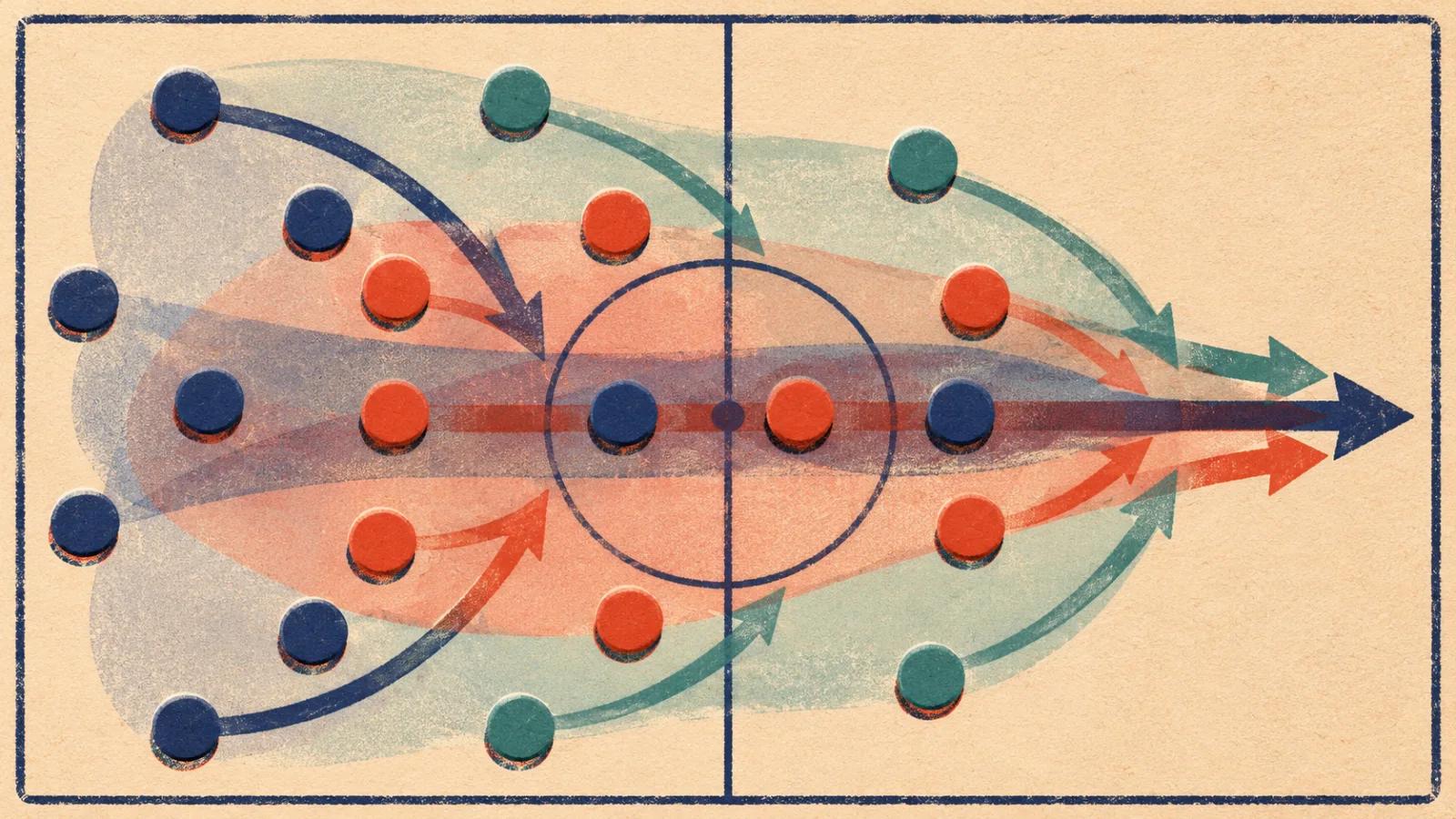
Shaded area shows cover. Arrows show the proposed movement or passing route.
Pochettino’s spare player
The Premier League’s retrospective credits Pochettino’s Spurs with the division’s lowest passes allowed per defensive action in both 2015/16 and 2016/17. His USA side offers a later reference. Against Paraguay, Folarin Balogun gave the combinations ahead of midfield a runner beyond the defence. The 4–1 defeat by Belgium in the round of 16 is a reminder of the risk once the opponent gets through those first lines. Those two international matches supply ideas, with very different opponents and game states.
One possible United version starts in a 4–2–3–1. Against the ball, Bruno can step alongside the striker and screen the return into midfield. In possession, Noussair Mazraoui can stay with the centre-backs while Dorgu goes on the outside. That puts Matheus Cunha and Bruno in separate inside lanes around Benjamin Šeško, with Mbeumo able to stay wide or break diagonally once the ball moves. Kobbie Mainoo can receive on the turn and Andrey Santos can hold underneath him. Mbeumo and Amad then offer two ways to use the right. An aggressive press has a shorter recovery if the two midfielders can still reach each other when it breaks.
References:[11] Premier League[12] U.S. Soccer[13] U.S. Soccer[10] Manchester United
Illustrative United selections · Attack ↑
Pochettino · 3–2–5 with the ball
Pochettino · 4–4–2 mid-block
Shaded area shows cover. Arrows show the proposed movement or passing route.
Conte’s spare centre-back
César Azpilicueta recalled moving from full-back to right centre-back when Conte reorganised Chelsea in 2016. The change gave the wing-backs room to advance and left a defender behind them who could step towards the ball. Chelsea’s account of the 5–0 against Everton shows how much attacking width that structure could carry.
The United version puts Leny Yoro, Matthijs de Ligt and Lisandro Martínez behind two pivots. Diogo Dalot and Dorgu supply the width. If a pass into Mainoo draws an opponent inside, an inside forward can turn it round the corner to the wing-back. On the way back the wing-backs can form a five, with the two inside players narrowing alongside the midfield. The cost is selection. Cunha and Bruno can occupy the pockets behind Mbeumo, but fitting Amad too requires a different role or a change of shape. The diagram is one possible selection from the registered squad. Availability will vary.
References:[14] Chelsea FC[15] Chelsea FC[10] Manchester United
Illustrative United selections · Attack ↑
Conte · 3–4–2–1 with the ball
Conte · 5–4–1 out of possession
Shaded area shows cover. Arrows show the proposed movement or passing route.
What the archive said
In the 15 October archive, United averaged 56.7 final points. The 11 November forecast, the last daily snapshot we recovered before Carrick’s dismissal, had them at 50.4 points and 10.8th, with 19.8% for top four and 13.4% for relegation. The 12 November snapshot, after the dismissal was reported and before the appointment, repeated those headline values.
The archive blends the current-season simulation with the preseason baseline. On 11 November the current-season component carried 52.6% of the blend. The recorded 600 iterations refer to the current-season run. The manager-quality and new-manager-bounce weights in the engine were zero. These are snapshots from Carrick’s tenure and its immediate aftermath, so the drift tells us what the model made of the season as evidence accumulated.
References:[22] Sensible Stats[23] Sensible Stats[7] FourFourTwo[5] Associated Press
United’s archived forecast fell by six points
Read archive values
- 2026-10-15
- 56.7 pts
- 2026-10-25
- 55.6 pts
- 2026-10-31
- 52.7 pts
- 2026-11-08
- 51.0 pts
- 2026-11-11
- 50.4 pts
- 2026-11-12
- 50.4 pts
Play the rest of the league
We fixed the first 100 results, including United’s eight points, and generated a score distribution for each of the 280 remaining fixtures with the site’s match engine. Each version of the league used the same random draws and the same scorelines in matches without United. United’s results changed the points, goals and positions of their opponents too. We ran 50,000 paired seasons for each scenario.
The Carrick continuation uses the reconstructed match probabilities as they stand. Pochettino’s version allows a six-match adjustment period before tilting the score distribution towards more United goals and fewer concessions. Conte’s version favours fewer concessions with almost flat attacking output once settled. Those changes translate the earlier editorial trial into fixture-level assumptions. The reconstructed continuation averages 43.6 points, against 50.4 in the archive. It holds team inputs at the November cutoff and skips the preseason blend. We also lack the archive’s exact availability and workload inputs. We compare all three coaches within the same reconstructed starting point.
References:[16] Premier League[23] Sensible Stats[22] Sensible Stats[24] Sensible Stats[25] Sensible Stats
Both change scenarios finish in the same range
The gain is nearer the bottom
The Pochettino scenario averages 46.1 points and 13.1st. Conte’s averages 46.4 and 12.9th. The two share a central 80% range of 38 to 55 points. Against Carrick’s 25.1% relegation frequency, the scenarios give 14.9% and 13.6%. A top-seven finish rises from 4.5% to 9.2% or 9.9%. If seven league places go to Europe, those are the qualification frequencies in these scenarios. These are league-position thresholds. Cup results and UEFA performance places can change the European places on offer.
Conte’s mean advantage over Pochettino is about a third of a point under these inputs. Reverse half the assumed tactical effect and both appointments finish below the continuation on average. The experiment asks what a change in the balance of chances might buy with the same squad. Recruitment is a separate question.
References:[17] Premier League[23] Sensible Stats[24] Sensible Stats
| Outcome | Carrick | Pochettino | Conte |
|---|---|---|---|
| Final points | 43.6 (35–52) | 46.1 (38–55) | 46.4 (38–55) |
| Final position | 14.5 (9–19) | 13.1 (8–18) | 12.9 (8–18) |
| Top four | 0.4% | 1.2% | 1.3% |
| Top five | 1.2% | 2.8% | 3.1% |
| Top six | 2.5% | 5.4% | 5.9% |
| Top seven | 4.5% | 9.2% | 9.9% |
| Top eight | 7.4% | 14.1% | 15.1% |
| Relegated | 25.1% | 14.9% | 13.6% |
Ranges are central 80%. Top four is the standard league route to the Champions League. Top five is the Champions League threshold if England receives an additional UEFA performance place. Read top five through top eight as the chance of any European competition if that many places go to the league table.
Where United finish
Each line gives the relative frequency of finishing in each place. Shading marks relegation.
Where each manager might recruit
These are scouting briefs for the three tactical plans. Each starts with a job United need done, and each assumes the existing players get a chance to fill it. The season simulation assigns no points to signings.
For Carrick, start with a centre-back who can contest a direct ball into the striker and has the recovery speed to cover when his partner steps out. Watch whether his first contact leaves a midfielder with a playable second ball. Compare him with Yoro and Maguire in those same situations. The aim is to turn some of the long balls that beat the press into possessions United can build on.
For Pochettino, start with a holding midfielder who can receive with an opponent at his back, play through pressure and close the centre when Mainoo or Fernandes moves forward. Give Santos and Baleba the same brief when available. A second priority, if the midfield pair can handle those jobs, is a left-back who can provide the width Dorgu offers and recover in time to defend the channel after a turnover. That would keep the asymmetry viable across a congested schedule.
For Conte, start with a right wing-back who can give the team a genuine outlet opposite Dorgu. Look for a player who can take a diagonal pass in stride, deliver low under pressure and arrive back in the defensive five. Use Dalot as the comparison. If the outside centre-backs repeatedly need help in the channel, scout one who can defend wide and play the first pass into an inside forward. That would let the wing-back stay high for longer without leaving the middle exposed.
Scout the whole sequence, including the runs where the pass never arrives. Look at how often the situation occurs, the quality of the opponent and what the player’s team asks him to do. For a signing to move up the list, he should solve a recurring problem better than the player already doing the job.
References:[10] Manchester United[4] Coaches’ Voice[14] Chelsea FC[18] FIFA Training Centre[19] FIFA Training Centre
A coaching test for the next ball
Try two short, equal blocks of a small-sided game with two goals and a marked central lane. In the first, play as usual. In the second, when possession is lost, the nearest player presses if a teammate can screen the forward pass. If that cover is missing, both recover inside. Keep the teams and pitch the same, and reverse the order next session to reduce the effect of fatigue.
Count every live-ball turnover by the team you are coaching. For each one, mark three things. Did the opponent play forward through the middle in their first two actions? Did your side win it back within five seconds and complete its first pass? From that regain, did it reach a wide teammate within three actions? Compare the counts per ten turnovers in each block. A cleaner defensive transition comes at a cost if nobody is left in a position to go forward.
For viewers, start at Anfield and try the same check over United’s next six league matches. Start with the losses of possession you can see and keep the score and opponent alongside your notes. When the first player goes to press, look for the second. If the ball gets past them both, see who gets there next.
References:[20] FIFA Training Centre[21] The FA Boot Room[16] Premier League
Sources and evidence
- Manchester United 4–4 Aston Villa, Premier League highlights
Sky Sports · Sky Sports · · Official video
- Manchester United, 4–4 match report and starting XI
- Premier League Match Centre, Matchweek 10
- Coaches’ Voice, tactical analysis of United–Villa
- Associated Press, Pochettino’s appointment on 13 November
- Manchester United, Pochettino appointment and start date
- FourFourTwo, Carrick’s dismissal reported on 12 November
- Swisher Post, league table after Matchweek 10
- Opta Analyst, United’s early-season use of a high block
- Manchester United, registered Premier League squad
- Premier League, Pochettino’s pressing at Spurs
- U.S. Soccer, USA 4–1 Paraguay
- U.S. Soccer, USA 1–4 Belgium
- Chelsea FC, César Azpilicueta on Conte’s switch to a back three
- Chelsea FC, Conte’s 3–4–3 against Everton
- Premier League, 2026/27 fixtures
- Premier League, European places and table tiebreaks
- FIFA Training Centre, role profiles for identifying talent
- FIFA Training Centre, scouting observations and data
- FIFA Training Centre, Anne Pochert on preparing the counter-press
- The FA Boot Room, pressing triggers and small-sided games
- Sensible Stats, archived forecasts and source manifests
- Sensible Stats, forecasting methodology
- Sensible Stats, complete scenario results
- Sensible Stats, fixture probabilities by scenario
Match facts and attributed observations come from the sources above. Tactical interpretations are Sensible Stats analysis.
Video evidence and viewing scope
Manchester United 4–4 Aston Villa, Premier League highlights · Sky Sports · Highlights · Accessed
- Clip 0:07–0:12 · Match 1′: Villa recover the ball near the edge of the area and move it right to Alysson, who finishes from the right side of the box. The edit starts during the attack.
- Clip 2:39–2:48 · Match 90+2′: Dorgu advances on the left outside Villa’s narrow line and sends a low delivery into the box. Zirkzee scores from close range.
- Clip 2:52–3:00 · Match 90+6′: Fernandes takes the corner. Dorgu’s headed equaliser follows inside a crowded goalmouth, a distinct sequence from the open-play delivery.